

Product: NH2-MIL-125Ti
Synonyms: NA
CAS:1309760-94-8
Basic Information
| Unit MF. | C48H5N6O36Ti8 | Unit MW. | 1624.5079 | ||
| Coordination Metal | Ti | Linkers |
2-Amino-Terephthalic acid(CAS:10312-55-7) |
||
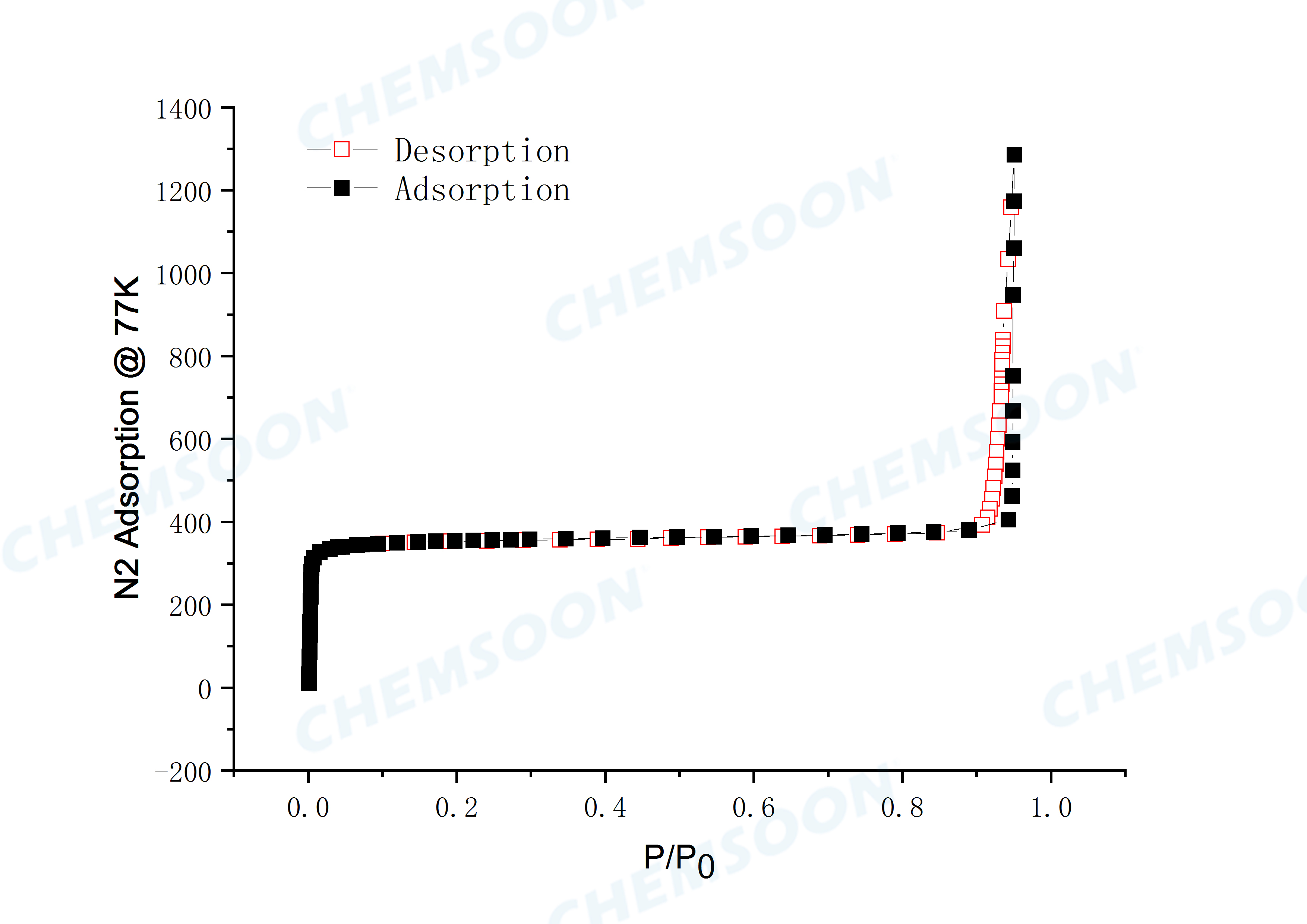
| Pore Size | 0.6nm; 1.25nm | Pore volume | 0.65g/cm3 | ||
| Surface Area | BET 1100-1200 m2/g | ||||
| Analog Structure |   |
||||
Product Property
| Appearance | Bright Yellow Powder |  |
||
| Particle Size | 500nm-1um round particles | |||
Stability
1) NH2-MIL-125(Ti) is stable in air and acquoeu solutions
2) Thermal decomposition temperature higher than 350 ° C
2) Thermal decomposition temperature higher than 350 ° C
Preservation
1) Keep sealed in dry and cool condition
2) It is recommended to activate for 3 hours at 150 degree in vacuum
Other Features
NA
Applications
1) Gas and pollute adsorption
2) NH2-MIL-125(Ti) is of good photocatalytical activity to degrade CO2 and organic pollutes
2) NH2-MIL-125(Ti) is of good photocatalytical activity to degrade CO2 and organic pollutes
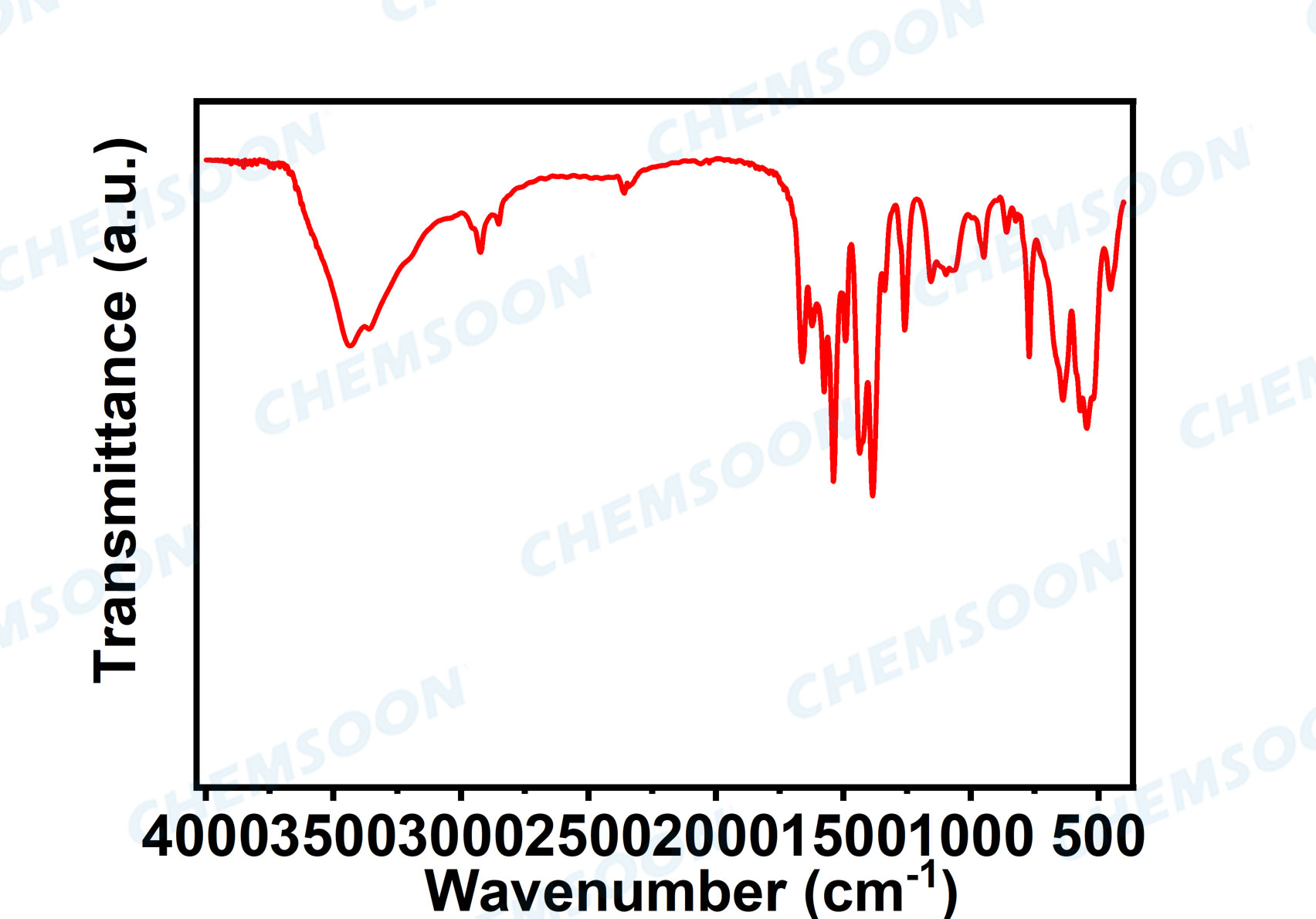
Characterizations


References
1) M. Dan-Hardi, C. Serre, T. Frot, L. Rozes, G. Maurin, C. Sanchez, G Férey, J. Am. Chem. Soc. 2009, 10857-10859, DOI: 10.1021/ja903726m ; A New Photoactive Crystalline Highly Porous Titanium(IV) Dicarboxylate;
2) Hou Wang, Xingzhong Yuan, Yan Wu, Guangming Zeng, Xiaohong Chen, Lijian Leng, Zhibin Wu, Longbo Jiang, Hui Li;Journal of Hazardous Materials, 2015, 286, 187-194; DOI:10.1016/j.jhazmat.2014.11.039; Facile synthesis of amino-functionalized titanium metal−organic frameworks and their superior visible-light photocatalytic activity for Cr(VI) reduction;
3)Fei Li, Dengke Wang, Qiu-Ju Xing, Gang Zhou, Shan-Shan Liu, Yan Li, Ling-Ling Zheng, Peng Ye, Jian-Ping Zou; Applied Catalysis B: Environmental, 2019, 243, 621-628; DOI:10.1016/j.apcatb.2018.10.043; Design and syntheses of MOF/COF hybrid materials via postsynthetic covalent modification: An efficient strategy to boost the visible-light-driven photocatalytic performance;
4)Yanghe Fu, Dengrong Sun, Yongjuan Chen, Renkun Huang, Zhengxin Ding, Xianzhi Fu, Zhaohui Li; Angewandte Chemie International Edition, 2012, 51, 3364-3367; DOI:10.1002/anie.201108357;An Amine-Functionalized Titanium Metal–Organic Framework Photocatalyst with Visible-Light-Induced Activity for CO₂ Reduction;
5)Yusuke Isaka, Yudai Kawase, Yasutaka Kuwahara, Kohsuke Mori, Hiromi Yamashita*; Angewandte Chemie, 2019, 131, 5456-5460; DOI:10.1002/anie.201901961;Two-Phase System Utilizing Hydrophobic Metal–Organic Frameworks (MOFs) for Photocatalytic Synthesis of Hydrogen Peroxide;
6)Philipp Brandt, Alexander Nuhnen, Marcus Lange, Jens Mollmer, Oliver Weingart, Christoph Janiak*;ACS Applied Materials & Interfaces, 2019, 11, 17350-17358; DOI:10.1021/acsami.9b00029; Metal−Organic Frameworks with Potential Application for SO₂ Separation and Flue Gas Desulfurization;
7)Xiaolang Chen, Shuning Xiao, Hao Wang, Wenchao Wang, Yong Cai, Guisheng Li, Minghua Qiao, Jian Zhu, Hexing Li, Dieqing Zhang*, Yunfeng Lu*; Angewandte Chemie International Edition, 2020, 59, 17182-17186;DOI:10.1002/anie.202002375; MOFs Conferred with Transient Metal Centers for Enhanced Photocatalytic Activity;
8)Frederik Vermoortele, Michael Maes, Peyman Z. Moghadam, Matthew J. Lennox, Florence Ragon, Mohammed Boulhout, Shyam Biswas, Katrien G. M. Laurier, Isabelle Beurroies, Renaud Denoyel, Maarten Roeffaers, Norbert Stock, Tina Düren, Christian Serre, Dirk E. De Vos*;Journal of the American Chemical Society, 2011, 133, 18526-18529; DOI:10.1021/ja207287h; p-Xylene-Selective Metal–Organic Frameworks: A Case of Topology-Directed Selectivity;
