Home >
News > Reversible Interconversion between Luminescent Isomeric Metal–Organic Frameworks of [Cu₄I₄(DABCO)₂]
Reversible Interconversion between Luminescent Isomeric Metal–Organic Frameworks of [Cu₄I₄(DABCO)₂]
Summary:
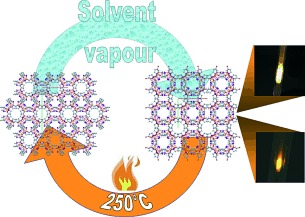
The authors from Dipartimento di Chimica “G.Ciamician” Universita di Bologna (Italy) and Istituto per la Sintesi Organica e la Fotorcattivit (SOF)-CNR (Italy) developed two isomeric metal-organic frameworks (MOF I and II) of [Cu₄I₄(DABCO)₂] with porosity and luminescence, achieving reversible interconversion and clarifying structure-luminescence relationships.
 Background:
1. To address the rarity of MOFs with cubane-like Cu(I) iodide clusters and insufficient research on reversible interconversion of halide cluster-based isomeric MOFs, previous researchers explored Cu(I) complexes but lacked studies on such isomeric MOFs’ interconversion and luminescence regulation.
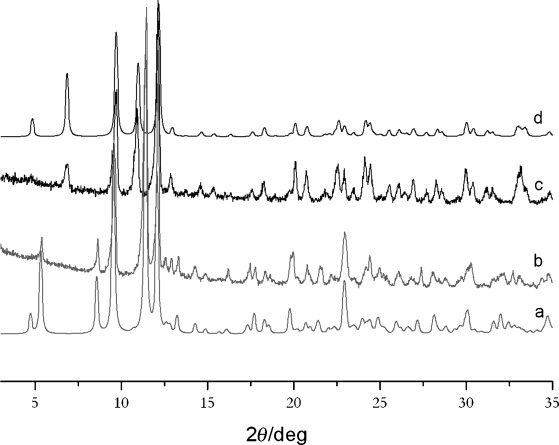
2. The authors proposed synthesizing two isomers via different solvents, investigated their reversible interconversion (solvent vapor/heating), and revealed the correlation between Cu···Cu distances and luminescence properties.
Research Content:
1.Synthesis:
MOF I: Synthesized by mixing CuI (1 mmol) in saturated KI aqueous solution with DABCO (1.2 mmol) aqueous solution, followed by centrifugation and washing.
MOF II: Synthesized by mixing DABCO (1.2 mmol) and CuI (1 mmol) in acetonitrile at 70°C, refluxing for 3 h, then centrifugation and washing; single crystals obtained via three-layer crystallization.
2.Characterizations:
1) BET/pore size: Not tested; solvent-accessible volume of both isomers is 20.5% per unit cell; MOF II has channels with diameters 7.056 Å and 7.066 Å.
2) SEM/TEM: Not conducted.
3) Optical tests: MOF I emits at 580 nm (295K, τ=8.0μs) and 590 nm (77K, τ=15.0μs); MOF II emits at 556 nm (295K, τ=13.4μs) and 578 nm (77K, τ=13.5μs).
3.Application: Not tested; potential for gas storage (due to porosity) and luminescent materials (due to temperature-dependent emission).
4.Mechanism: Luminescence originates from "cluster-centered" excited states (mixed XLCT/MC character); shorter Cu···Cu distances (e.g., MOF I: ~2.68 Å; MOF II at 80K: ~2.65 Å) cause red-shifted emission; different packing modes enable reversible interconversion.
Background:
1. To address the rarity of MOFs with cubane-like Cu(I) iodide clusters and insufficient research on reversible interconversion of halide cluster-based isomeric MOFs, previous researchers explored Cu(I) complexes but lacked studies on such isomeric MOFs’ interconversion and luminescence regulation.
2. The authors proposed synthesizing two isomers via different solvents, investigated their reversible interconversion (solvent vapor/heating), and revealed the correlation between Cu···Cu distances and luminescence properties.
Research Content:
1.Synthesis:
MOF I: Synthesized by mixing CuI (1 mmol) in saturated KI aqueous solution with DABCO (1.2 mmol) aqueous solution, followed by centrifugation and washing.
MOF II: Synthesized by mixing DABCO (1.2 mmol) and CuI (1 mmol) in acetonitrile at 70°C, refluxing for 3 h, then centrifugation and washing; single crystals obtained via three-layer crystallization.
2.Characterizations:
1) BET/pore size: Not tested; solvent-accessible volume of both isomers is 20.5% per unit cell; MOF II has channels with diameters 7.056 Å and 7.066 Å.
2) SEM/TEM: Not conducted.
3) Optical tests: MOF I emits at 580 nm (295K, τ=8.0μs) and 590 nm (77K, τ=15.0μs); MOF II emits at 556 nm (295K, τ=13.4μs) and 578 nm (77K, τ=13.5μs).
3.Application: Not tested; potential for gas storage (due to porosity) and luminescent materials (due to temperature-dependent emission).
4.Mechanism: Luminescence originates from "cluster-centered" excited states (mixed XLCT/MC character); shorter Cu···Cu distances (e.g., MOF I: ~2.68 Å; MOF II at 80K: ~2.65 Å) cause red-shifted emission; different packing modes enable reversible interconversion.
 Outlook:
This research synthesizes two isomeric MOFs, realizes their reversible interconversion, and clarifies structure-luminescence correlations, providing a basis for designing functional luminescent porous materials.
Reversible Interconversion between Luminescent Isomeric Metal–Organic Frameworks of [Cu₄I₄(DABCO)₂]
Authors: Dario Braga, Lucia Maini, Paolo P. Mazzeo, Barbara Ventura
DOI: 10.1002/chem.200900743
Link: https://chemistry-europe.onlinelibrary.wiley.com/doi/10.1002/chem.200900743
The above review is for academic progress sharing. For any errors or copyright issues, please contact us for correction or removal.
Outlook:
This research synthesizes two isomeric MOFs, realizes their reversible interconversion, and clarifies structure-luminescence correlations, providing a basis for designing functional luminescent porous materials.
Reversible Interconversion between Luminescent Isomeric Metal–Organic Frameworks of [Cu₄I₄(DABCO)₂]
Authors: Dario Braga, Lucia Maini, Paolo P. Mazzeo, Barbara Ventura
DOI: 10.1002/chem.200900743
Link: https://chemistry-europe.onlinelibrary.wiley.com/doi/10.1002/chem.200900743
The above review is for academic progress sharing. For any errors or copyright issues, please contact us for correction or removal.

