Home >
News > Moisture-Resistant Superhydrophobic MOFs via Postsynthetic Modification
Moisture-Resistant Superhydrophobic MOFs via Postsynthetic Modification
Summary:
The authors from Department of Chemistry and Biochemistry, University of California, San Diego developed moisture-resistant and superhydrophobic metal-organic frameworks (MOFs) via postsynthetic modification (PSM), achieving improved moisture stability and tunable hydrophobicity for potential industrial applications.
Background:
1. MOFs are promising for gas adsorption, separations, and catalysis due to their tunability, high porosity, and thermal stability. However, many promising MOFs suffer from moisture instability, limiting their practical use.
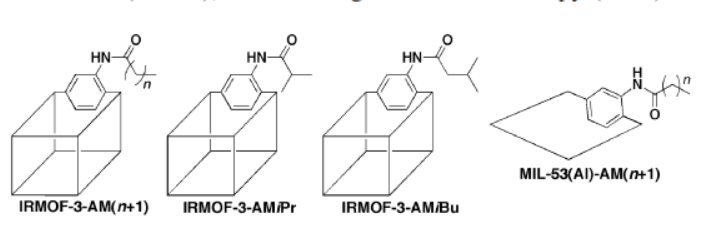
2. The authors proposed introducing hydrophobic alkyl chains into amine-containing MOFs via PSM, successfully enhancing moisture resistance and modifying hydrophobicity of IRMOFs and MIL-53(Al)-NH₂.
Research Content:
1. Synthesis
The authors synthesized modified MOFs using PSM: IRMOF-3 was modified with various anhydrides, and MIL-53(Al)-NH₂ was modified with three alkyl anhydrides (acetic, valeric, enanthic anhydrides) to obtain derivatives like IRMOF-3-AMn and MIL-53(Al)-AMn.
2. Characterizations
1. BET and pore size distribution: Not explicitly reported in the provided content.
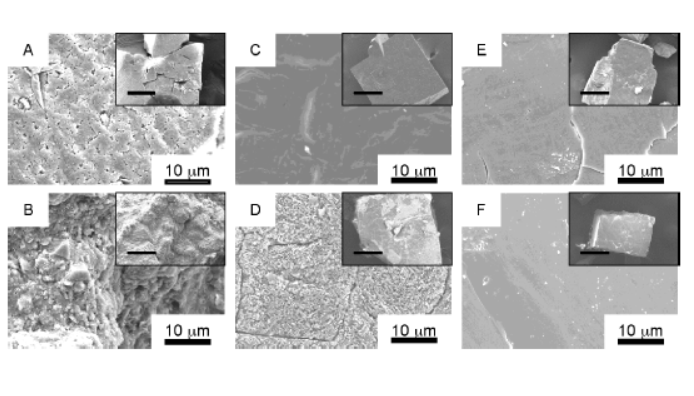
2. SEM tests show IRMOF-1 decomposes in water, IRMOF-3 surface degrades, while modified MOFs (e.g., IRMOF-3-AM6) retain morphology; MIL-53(Al)-derivatives have submicrometer crystallite size.
3. Other tests: Contact angle measurements confirm hydrophobicity (IRMOFs: ≥116°; MILs: >150° for superhydrophobicity); PXRD shows modified IRMOFs maintain crystallinity for 4 days; ¹H NMR and ESI-MS verify successful modification.
3. Application
The materials were tested for moisture stability and hydrophobicity: modified IRMOFs resist ambient air and water degradation; MIL-53(Al)-AM4/AM6 exhibit superhydrophobicity, enabling potential use in anti-fouling coatings and industrial separations.
4. Mechanism
The introduction of medium-to-long alkyl chains via PSM imparts hydrophobicity, shielding moisture-sensitive MOF lattices. For MIL-53(Al)-derivatives, submicrometer crystallite size combined with hydrophobic groups contributes to superhydrophobicity.
Outlook:
This research demonstrates a feasible strategy to tune MOFs’ hydrophobicity and moisture stability via PSM, expanding their applicability in industrial settings. The superhydrophobic MOFs hold promise for thin film coatings in satellite communications, textiles, and electrical engineering.
Moisture-Resistant and Superhydrophobic Metal-Organic Frameworks Obtained via Postsynthetic Modification
Authors: Joseph G. Nguyen and Seth M. Cohen*
DOI: 10.1021/ja100900c
Link: https://pubs.acs.org/doi/10.1021/ja100900c
The above review is for academic progress sharing. For any errors or copyright issues, please contact us for correction or removal.
SEO Keywords and Description
SEO Keywords: MOFs, PSM, moisture-resistant, superhydrophobic, IRMOF-3, MIL-53(Al)-NH₂, alkyl anhydrides
SEO Description: PSM-synthesized moisture-resistant/superhydrophobic MOFs (IRMOF-3, MIL-53(Al)) for industrial adsorption and anti-fouling applications.

